5 quick and easy ways to increase sales on your ecommerce website (using only search)

You don’t need to have a massive budget to increase ecommerce sales on your website. By doing something as simple as upgrading your shop’s search, you’ll be able to sell more, better understand your customers and increase traffic.
That’s exactly what Spain’s number 1 online rug shop did. In 2021 alone it sold more than 10,000 rugs and doormats and increased revenue by 10% after switching to a better ecommerce search engine.
Here are the 5 simple ways your shop’s search can help increase sales:
- Identify and use keywords to increase ecommerce traffic
- Offer mobile friendly search to generate more sales
- Display your best selling offers in the search layer
- Boost the visibility of your most searched products and brands
- Build trust for better customer loyalty and recurring revenue
Now, let’s walk through them in more detail.
1. Identify and use keywords to increase ecommerce traffic
Keywords are a great way to rank in Google. What your customers are searching for in your shop is an indication of what others are searching for in Google.
By tagging the categories in your shop by the terms people are actually searching for, you can rank higher in search engines. Ranking higher is a great way to increase traffic to your ecommerce website.
The secret weapon is discovering what your potential customers are actually searching for. You can do this by using data from your shop’s search engine.
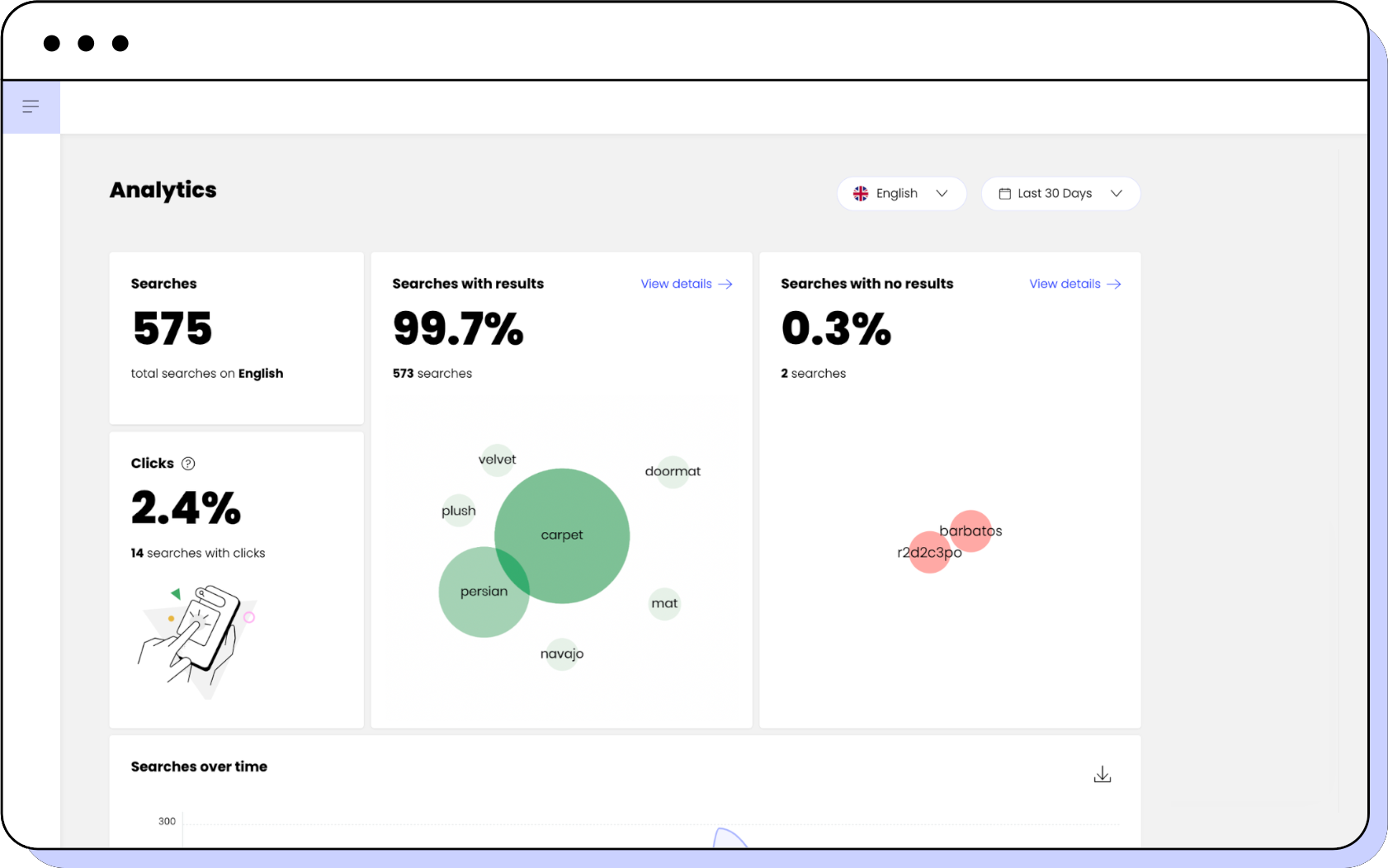
Pay close attention to the terms that people are searching for. If you’re a clothing brand, people might be searching for evening dresses. After noting down the most common terms customers search for, you need to create categories based around these terms.
Once done, when people search for evening dresses on Google, your brand will show up and people who click on it will be brought directly to the category page.
2. Offer mobile friendly search to generate more sales
Having a fully functioning mobile website is important. Why? 60% of consumers in the UK are using their mobile to shop. But having a responsive website isn’t the only thing you need to check off your list.
You have to make sure that all the areas where a customer interacts on your website are also mobile friendly. That could be your checkout and payment process, how product images display or your search.
When it comes to search, that same rug shop we mentioned in the intro saw a 4X increase in sales once they began using a mobile friendly search tool. The reason for this increase is down to better discoverability.
Shoppers still need to find the products they’re looking for and a frustrating search experience can lead to a higher bounce rate. Being able to easily toggle filters, price ranges and product categories on a mobile device will generate more sales.
3. Display your best selling offers in the search layer
Even though they’re on your website, shoppers might not know what campaigns you’re running or what your best offers are.
To make your campaigns more effective, you can display offers, discounts or new products directly in your search using banners.
While banners are powerful, they’re most effective when they’re relevant. To make your offers relevant, find a search engine that allows you to display banners for specific searches.
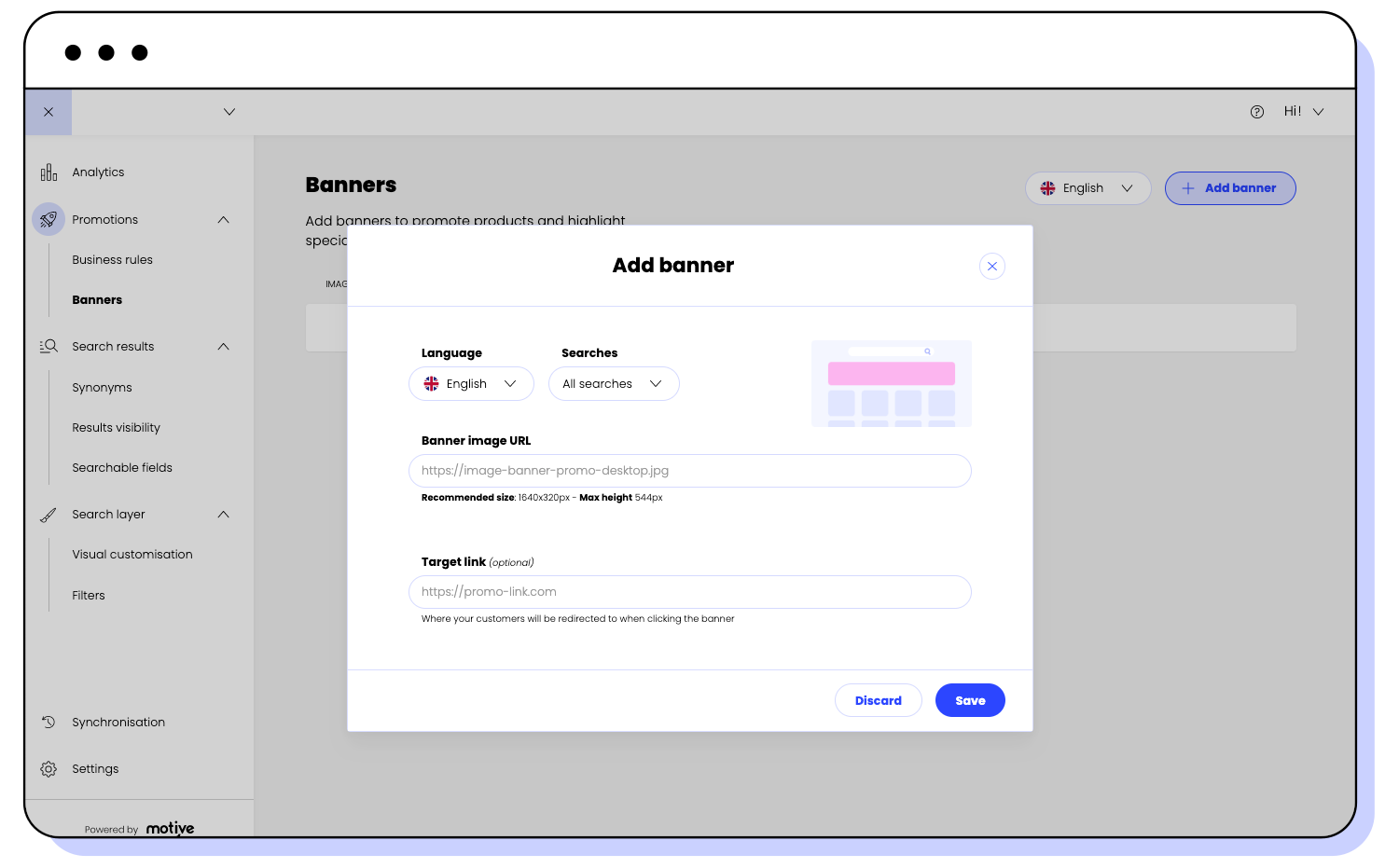
Let’s say you’re an electronics shop and think you can sell more high-end TVs during the World Cup. You decide to offer a 20% discount on TVs over £500. You can configure your search to show banners when shoppers search the word TV or a specific brand. When they do, they’ll see your promotion for 20% off which should lead to more conversions.
4. Boost the visibility of your most searched products and brands so you can sell more
You don’t have to just hope customers find your best offers. By highlighting the products or brands that are most searched by your customers, you improve the likelihood of increasing sales on your ecommerce site.
To do this, check the analytics of your search tool and identify the brands or products that convert the most in your shop. Once you’ve identified these products, make sure that they appear higher up in the search results when shoppers search.
Some search tools allow you to change a product's positioning to make it appear higher up in the results. If you’re a hardware store and have identified that a specific brand of screwdriver has more conversions or searches, this is the screwdriver set that you need to make appear in the first row of search results.
By doing this, you make your top-selling products more visible and reduce the steps and time a shopper might take to make a decision that then leads to a sale.
5. Build trust for better customer loyalty and recurring revenue
Public opinion is changing, and so are the tools available to shop owners. Your ecommerce website no longer needs to track shoppers and collect their data to offer a great shopping experience.
There are more and more tools available that respect customer privacy, and many companies are figuring out ways to offer personalised experiences without harvesting data.
A recent McKinsey study found that businesses building trust into their DNA are more likely to see annual growth rates on their revenue of at least 10% or more. The study also confirmed that digital trust truly matters, with many consumers now willing to take their business elsewhere when companies don’t deliver it.
By finding and using these tools, you can build better trust between you and your customer and build a loyal customer base.
What’s the best search for ecommerce?
With a number of options available when it comes to ecommerce search, how do you know which to go for?
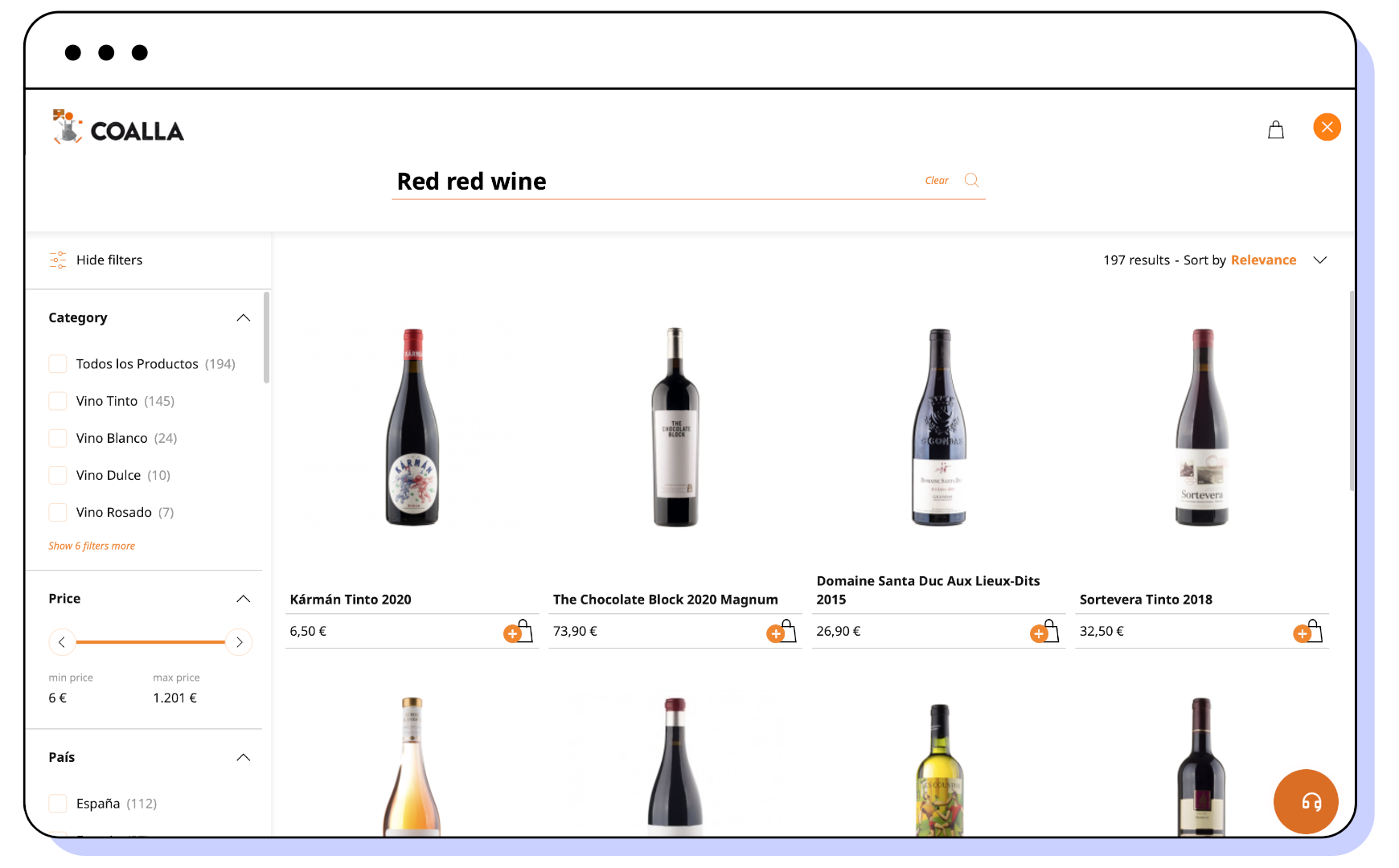
1. Choose a tool that allows you to pay based on the size of your shop
Try to pay by searches and avoid providers that charge by requests. Requests can become pricey and are difficult to understand.
2. Be sure that a mobile version of the search layer is included
Lot’s of providers charge extra for mobile search, but, as we’ve seen, it’s vital to have. Avoid paying for additional extras like this and look for a search provider that includes mobile search in your plan.
3. Make sure the search has all the features you need
You want to be able to add banners, boost products in your search results, make sure customers find products when they misspell them and more. Make a list of your requirements and find the tool that’s best suited to your needs.
4. Find a tool that doesn’t need your shoppers’ data to function
With GDPR and other data protection rules constantly evolving, a search tool that doesn’t require your customers data to offer a personalised experience guarantees you’ll never have to worry about changes in regulations. Search that doesn’t collect data also builds trust with shoppers.
For a search tool that can be installed in a matter of minutes, allows you to achieve all the tips in this article, charges by searches and includes mobile search in every plan, we recommend Motive Commerce Search.